The Missing Layer of the Smart City: Social Infrastructure
Technology can make cities more efficient. But can it make people feel that they belong?
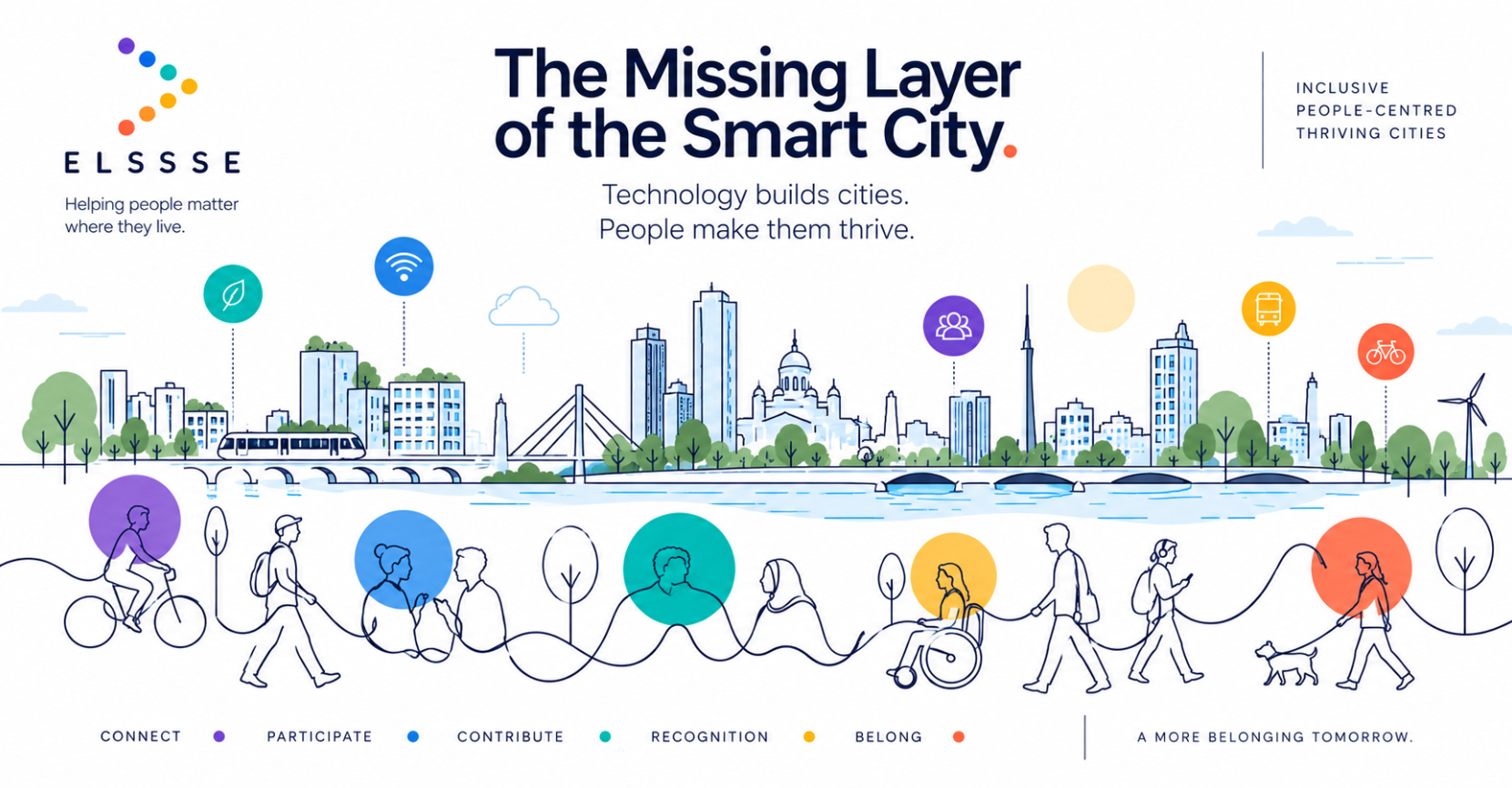
A smarter kind of smart city
For decades, the idea of the “smart city” has been closely associated with technology. Sensors. Data. Connected transport. Digital government. Intelligent infrastructure. These capabilities have transformed how cities operate. But the IMD Smart City Index 2026 raises an important question: what if some of the most important determinants of a smart city are not technological at all?
The 2026 index covers 148 cities worldwide and evaluates smart-city performance through residents' perceptions of both the structures available to them and the technologies used to improve urban life. One finding is particularly relevant.
IMD's analysis shows that the Structures pillar is a stronger and more consistent predictor of overall smart-city performance than the Technology pillar. Structures include fundamental aspects of city life such as institutions and opportunities for citizens to participate. This points toward a broader understanding of what makes a city smart.
Smart infrastructure is not enough
A city may have excellent public transport, digital government services and sophisticated urban data systems. Yet someone can still arrive there and feel completely alone. A skilled international employee can relocate for a job but struggle to build relationships outside the workplace. A student can spend years in a city without ever feeling part of its community. A newcomer can live somewhere, pay taxes, and use its services while having few meaningful opportunities to participate or contribute. These are not primarily technology problems. They are social infrastructure problems. And they matter because cities increasingly compete not only to attract people, but to create places where people want to stay, participate, and build their lives.
Helsinki shows why the distinction matters
Helsinki performs exceptionally well in conventional smart-city terms. In the IMD Smart City Index 2026, Helsinki ranks 11th among 148 cities worldwide. Yet some of the underlying indicators tell a more nuanced story. Among surveyed residents, 57.2% agreed that minorities feel welcome and 53.4% agreed that residents contribute to local-government decision-making. Meanwhile, 57.8% said that online platforms through which residents can propose ideas had improved city life. These figures should not be interpreted as evidence that Helsinki is failing. Quite the opposite. They demonstrate that even one of the world's leading smart cities has another frontier to explore. The question is no longer only: How efficiently does the city work? It is also: How effectively can people become part of it?
From smart cities to belonging cities
We can think about the evolution of smart cities in three layers.
Physical infrastructure
Housing, transportation, public spaces, and essential services.
Digital infrastructure
Connectivity, data, platforms, sensors and digital public services.
Social infrastructure
The relationships, opportunities and mechanisms that enable people to connect, participate, contribute, be recognised and ultimately belong.
The first two help people live in a city. The third helps them become part of it. This third layer is where ELSSSE operates.
Building the social infrastructure of modern cities
ELSSSE is built around a simple progression:
connect → participate → contribute → recognition → belong
Connection alone is not belonging. Meeting someone is a beginning. People become embedded in communities when they have opportunities to participate. Participation creates opportunities to contribute. Contribution allows people to become recognised for the value they bring. And recognition helps transform a place from somewhere a person happens to live into somewhere they feel they have a space. For cities receiving international workers, students, immigrants and other newcomers, creating these pathways can become an increasingly important part of urban strategy.
ELSSSE therefore approaches belonging not simply as a personal feeling, but as something cities and communities can actively enable.
The next smart-city question
The smart-city movement has become very good at asking questions such as: How do people move through the city? How easily can they access services? How effectively can technology connect residents with government? The next generation of smart cities should add another question: Do the people who live here feel that they matter here?
The IMD Smart City Index 2026 provides an important signal in that direction: technology matters, but the structures surrounding people's everyday experience of the city matter enormously too. The smartest cities of the future will therefore not simply be the most connected. They will be places where different people can arrive, connect, participate, contribute, be recognised - and belong.
Because a city isn't truly smart if people don't belong there.
Explore the IMD Smart City Index